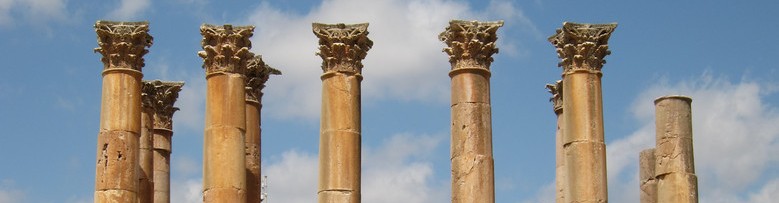
The major issue facing the column today is conservation and preservation. This lovely column was not designed for such weather and so it is suffering from the weather (snow and acid rain), as well as from general wear and tear.
Preservation of the column over the years has been diligently handled by the parks department. The column is officially apart of the Flushing Meadows-Corona Park which was dedicated on June 3, 1967 and is 1,258 acres, making it the largest park in all of New York City.1 The column is one of a handful of fair structures that were incorporated into the park including the Unisphere, the 1939-40 New York City Pavilion, now the Queens Museum of Art, and the Hall of Science.2 Historical photographs and archival materials affirm that the column was not moved from its original location on the fair grounds.
From the time of dedication of the new Flushing Meadows-Corona Park until relatively recently, there is little media coverage of the column. The column’s legacy and its need for preservation, however, did not end after the fair. In 2004, the column was featured in a press release from Mayor Michael R. Bloomberg’s office. Along with several other prominent cultural heritage artifacts in New York City, the Column of Jerash was slated to undergo preservation efforts as part of a new $19.5 billion dollar partnership between New York City’s Department of Parks and Recreation and the History Channel intended to boost tourism and promote the cultural heritage of New York City.3 Subsequent articles in local newspapers detailed some of the “structural refurbishing” and “stone consolidation” conducted on the column to protect the outer layer of marble already badly damaged by the region’s weather. In addition, it was reported that the column had been the target of frequent graffiti attacks, which was corrected with solvent removers that may have contributed to some of the more recent decay.4 Four years later, in 2008, the parks department conducted additional assessment tests on the column’s cracks and a special material was injected into the cracks.5
Finally, the column had received much needed preservation efforts after sitting seemingly untouched for almost forty years. Judging from the sudden increase in preservation efforts in the mid-to-late 2000s, the column has not been enduring New York City’s harsh winters and humid summers with any grace.
In a new sign of appreciation for the city’s “ancient gift,” a New York Daily News article reports that the column received new signage in 2011.6 The column’s status as both a lasting reminder of the World’s Fair and a tourist attraction was, by this point in time, firmly in place. In a not-so-new twist, the article also cites Tom Finkelpearl, Executive Director of the Queens Museum of Art, having said that the museum might be able to move the column indoors, but would have to create an expensive foundation, and doing so would remove memories of the already fading fair from the context of the park. The wish by those with knowledge of material culture to move the column indoors is, in fact, not a new idea. In a series of memoranda spanning the length of the fair, James J. Rorimer, then Director of the Metropolitan Museum of Art, wrote to Charles Poletti, matter-of-factly stating that such stone work as the column should not be kept outside and that the MET would be happy to have the column moved to the MET at the museum’s expense. Poletti for his part curtly responded that he would look into the matter. Additional memoranda between Harris and Poletti discuss that the column was treated chemically to ensure that it could endure New York winters; this correspondence also emphasize that the column was gifted to the park not the MET and so should stay put.7 Of course, the matter of gift-giving and receipt aside, the column was always intended to be a lasting icon of the fair in Moses’ park and, as such, it is in need of ongoing preservation. In sum, these articles not only call attention to the pressing need for better preservation efforts beyond band-aids, but also show that the column has become a tourism icon, like Cleopatra’s Needle in Central park.8
In sum, these newspaper articles largely corroborate the “Complete Maintenance Treatment Report” kept on Parks Department file for the Column of Jerash.9 Since at least 2004, the Parks Department has diligently been conducting rilem tests to determine how porous the surface has become in the temperate climate of New York City. The report also reveals the care the Parks Department has taken to repeatedly wash and protect the surface of the column, in addition to removing any graffiti crayon. The New York City Parks Department, through constant diligence, has helped preserve the Column of Jerash. The numerous newspaper articles and internal memoranda and documents not only call attention to the continuing need for preservation efforts, which have been ongoing, but also demonstrate that the column has become a tourism icon, like Cleopatra’s Needle in Central park.10
- Samuel 2007, 193. ↩
- Sameul 2007, 194. For a complete list of fair structures and buildings that were incorporated into the park and for pictures, see Cotter 2008, 117-188ff. ↩
- Press Release, December 8, 2004, Office of the Mayor. ↩
- Queens Time Ledger, December 16, 2004. ↩
- Queens Chronicle, “World’s Fair Relics Get Facelift from Conservators,” July, 24, 2008. New York Daily News, “Parks Dept. experts undo ravages of time in timeless structures,” August, 4, 2008. ↩
- Hirshon 2011. ↩
- NYPL Archives. ↩
- For additional information about tourism, see Press Release 2012 and Wingfield 2011. ↩
- Parks Report. ↩
- For additional information about tourism, see Press Release 2012 and Wingfield. ↩

